Prep Every Building for Annual Fire Extinguisher Inspection
The service truck pulls in. Two technicians, one clipboard, and a schedule that assumes every unit is exactly where it was last year. Then comes the locked electrical room, the missing key, and an inventory list that no longer matches the building. The result is a return trip, a delayed compliance record, and hours of coordination that should have gone into prevention. Most missed units and repeat visits trace back to facility-side gaps: outdated inventories, locked rooms, and extinguishers moved since the last service.
This guide flips the visit to your side of the clipboard. It covers the inspection checklist for fire extinguisher readiness that property and facilities teams can assemble before the crew arrives, so a mobile team can work every unit in a single pass. You will learn why annual inspections turn into two visits, the two layers of a fire extinguisher inspection checklist, and what access, inventory, and a zone map really require. We also walk through refreshing your list, grouping units by building, clearing access, coordinating escorts and after-hours rules, handling moved or added units, handing a prep list to a site supervisor, collecting the right documentation afterward, and finishing the visit in one pass.
Why Annual Extinguisher Inspections Turn Into Two Visits
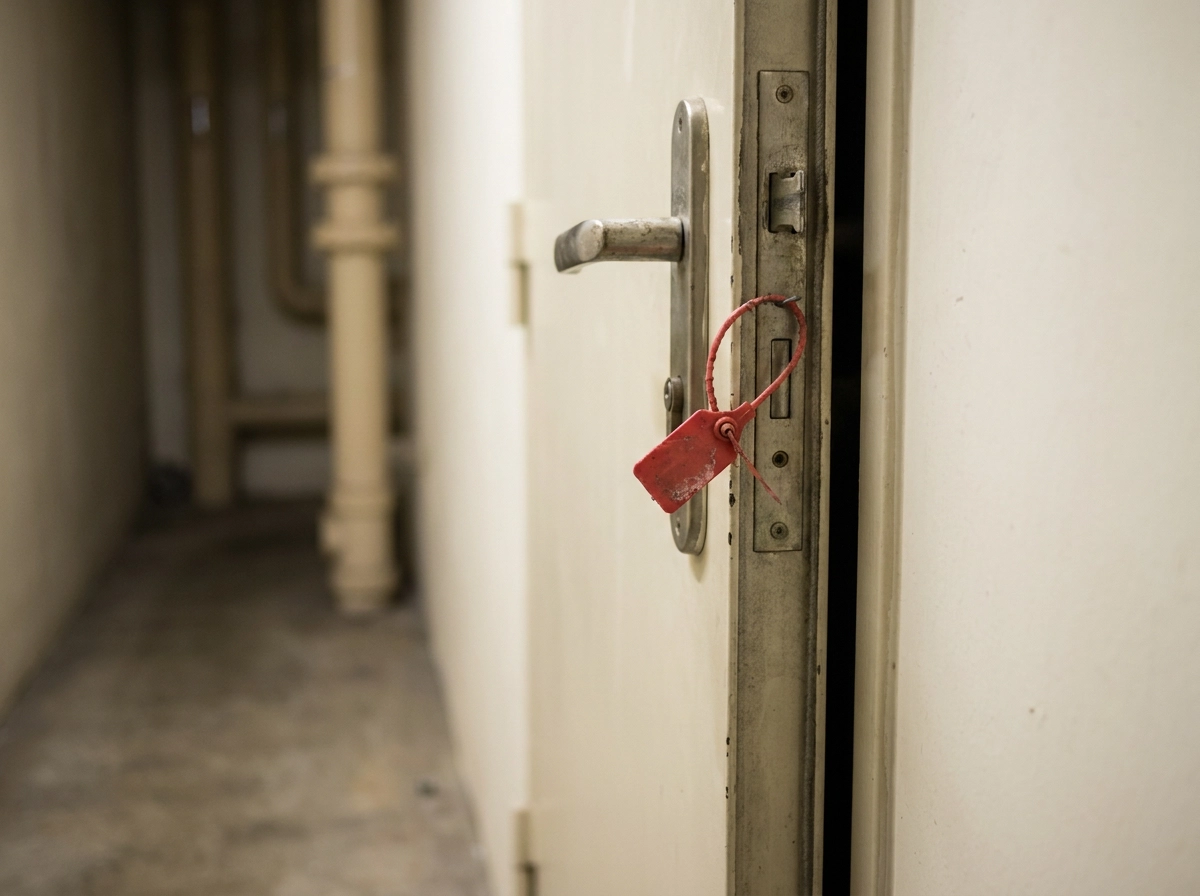
Missed units rarely come down to how fast a crew works. In First Response's field experience across Southern California, the cause is facility-side almost every time: a stale list, a suite never added to the map, or a locked room.
The extinguisher itself does not change between visits. What changes is that the crew can finally reach it, and that costs a full second arrival window, not a quick fix: another escort, another set of keys, another round of tenant notices, another block of staff time on a route that should have been finished.
Return trips also split the service record. Units tagged on the first pass are documented; units missed carry a gap until the crew returns, the kind of gap an inspector or insurer asks about.
Published counts of missed units or return-visit rates are not available in citable form, so treat this as a servicing company's operating observation, not industry statistics. The facility controls what decides whether the visit finishes in one pass: access, inventory accuracy, and route clarity. All three are settled before the crew pulls into the lot. Building in monthly visual inspections between annual services closes part of that gap.
The Fire Extinguisher Inspection Checklist, Two Layers Deep
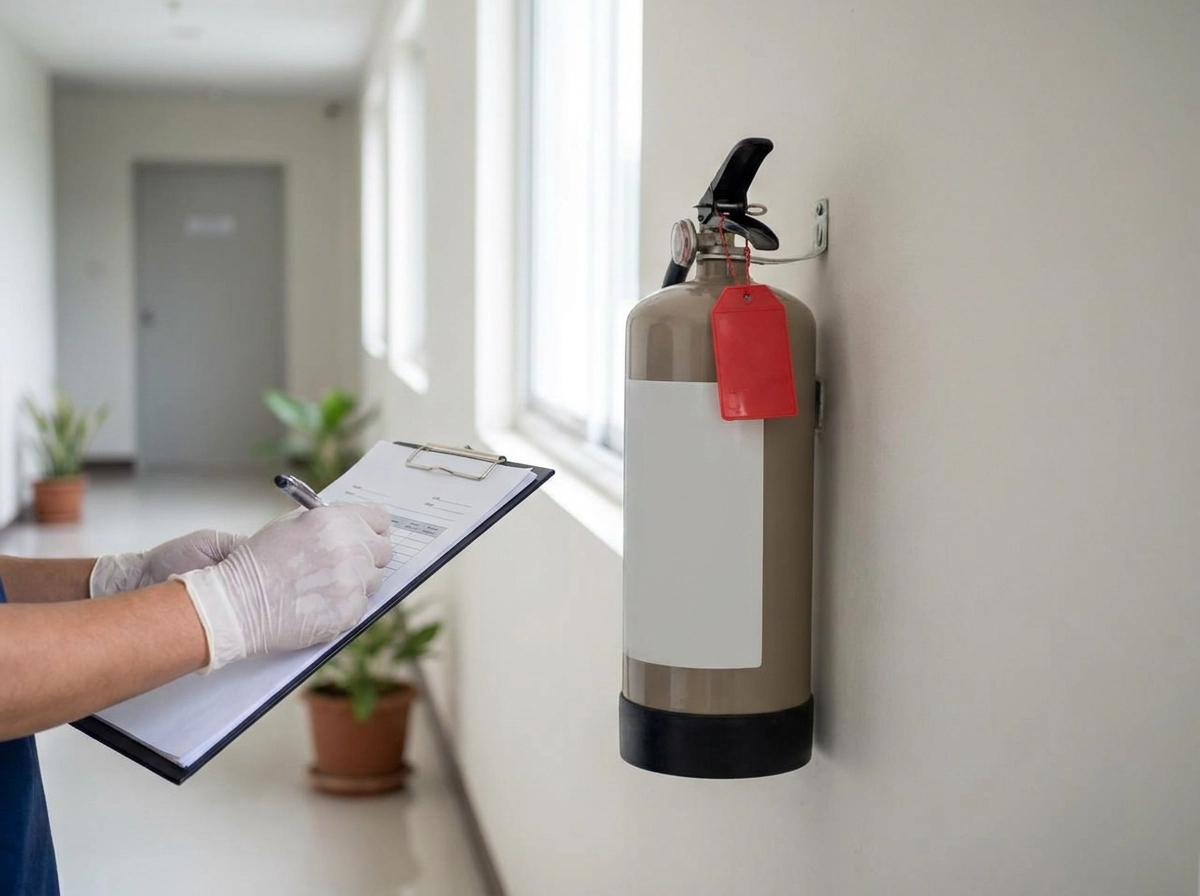
Search for a fire extinguisher inspection checklist and most results list what the technician evaluates at the unit: whether it sits where it belongs, whether it is accessible and unobstructed, the visible condition of the cylinder, valve, hose, and mount, and whether the service tag lines up with prior records. What the annual inspection verifies at each stage covers that layer in detail.
Layer one rarely stalls a visit. The technician is not the one who unlocks Room 214 or knows the leasing office moved down the hall.
Layer two is what the facility brings: an inspection list that matches the building today, access to every space on it, an escort or credentials the crew can use, and last year's records for cross-checking. A checklist written only from the technician's side assumes the doors open and the map is right. This section covers the facility side of the clipboard.
Between annual services, monthly visual checks catch what a once-a-year visit cannot: a unit pulled during a remodel, a cabinet blocked by stacked deliveries, or a missing unit nobody reported.
Requirements vary by occupancy. Confirm the specific rule with your local authority having jurisdiction and your servicing provider rather than assuming one standard covers a warehouse, a school site, and a clinic the same way.
What Ready Means: Access, Inventory, and a Zone Map
Ready means three things are settled before the crew arrives.
Access: every unit on the list sits behind a door, gate, or room the crew can enter during the scheduled window, reachable by key, code, badge, or an escort who is present when they pull up.
Inventory: a fire extinguisher inspection list that reflects what is mounted today, not when the list was created. Flag exceptions instead of deleting them. Multi-hazard facility mapping can help structure that audit by zone.
Zone map: buildings and spaces grouped in the walking order the crew will actually follow, so travel time is planned rather than discovered.
Miss one deliverable and the visit degrades predictably. Inventory without access means locked doors. Access without inventory means hunting. Both without a zone map means backtracking across the property.
Assign a named owner for each before the date is booked. Units with no owner a week out are why a property lands on a second trip.
Step 1: Build or Refresh the Fire Extinguisher Inspection List
Start the inventory rebuild from the most reliable source you already have: last year's service records and invoice line items. Those reflect what the previous crew physically found, and they are usually more accurate than a spreadsheet nobody has touched since March. Line items also surface units the office never knew about.
Build each row around the plain-language location: building, floor, room number or room name, and the nearest landmark. Room names survive staff turnover better than a floor plan reference.
Then add unit type and size, mount style (wall bracket, cabinet, vehicle), and any cabinet or recess detail the technician must open. Add an access-note column: key required, escorted space, locked gate, roof access, electrical room, tenant after-hours. Those notes turn a list into a workable route, and they line up with the fire extinguisher inspection requirements that govern what your record has to show.
Flag exceptions rather than deleting lines. Mark units as moved, added, missing since a specific date, or damaged. A deleted line vanishes from the record entirely.
Finally, keep the list sortable by zone so the crew walks it in route order rather than address order, and print a copy for the day so the technician can mark what could not be reached.
Step 2: Group Units Into Buildings and Zones
With the list sorted, group it the way your site is actually walked. Name zones as the signage reads: Building A, Building B, portables, parking structure, maintenance yard, gym buildings. Spreadsheet-invented zone names rarely match what is on a door.
Order zones for travel, grouping buildings on one loop and noting the stops that add ten minutes each: a gated service entrance, a lot with no reliable visitor parking. Match zone names and suite numbers to what the scheduling office used when booking, so the crew is dispatched to the site address, not the management office's mailing address.
List the spaces that get forgotten: mechanical rooms, elevator lobbies, kitchen and hood areas, storage yards, temporary buildings, and units carried in service vehicles that never appear on a wall-mounted count. Across a portfolio, managing compliance across multiple buildings and sites starts with the same mapping discipline.
Give the zone map to the escort as well as to the servicing company; the person walking the crew makes the route work in real time.
Step 3: Clear Access Before the Day Of
With the zone map in hand, the next failure point is authorization. Confirm who holds keys, keycards, badges, gate codes, alarm codes, and elevator overrides, and confirm who may release them on the day of the visit. Authorization, not the key itself, is what breaks. Walk the inspection list against real doors about a week out; a storage room that became a records room, a suite that changed tenants, or a closet now packed with network gear all change the answer. A pre-inspection placement audit checklist can help verify each unit still sits in a reachable, code-aligned spot.
Notify tenant-occupied spaces in advance and give them a defined window, then log which tenants confirmed. Settle the after-hours policy in writing before the visit; an evening or weekend slot may bill differently or need different staffing, and some buildings service more easily before opening.
Confirm the arrival window with the site, not just the corporate office, so whoever meets the crew knows they are coming and the building is open. Flag limited-access items early: roof access, elevator machine rooms, and electrical rooms often require one specific staff member present and cannot be arranged on the fly.
Step 4: Escorts, After-Hours Rules, and the Day-Of Contact
With access settled, choose between a single escort and a free-run arrangement with keys and codes. Free-run is faster, but it needs a signed access arrangement and someone reachable by phone for the entire window. Keep one escort for the whole visit where possible. Switching escorts mid-route resets the walking order, creates overlap, and costs the crew the time two people saved.
Build a day-of contact sheet: primary contact mobile, backup contact, gate and alarm instructions, escort start time, and the person authorized to sign service documentation. For school districts and government facilities, check visitor-log, badge, and background-check requirements in advance and confirm the security desk check-in point.
Confirm sign-off in writing before the visit. OSHA requires the annual maintenance date be recorded and retained for one year after the last entry or the life of the shell, whichever is less. Name who signs for completed tags and for any unit the crew could not service, so the record does not sit unsigned for months.
Exceptions: Moved, Added, and Out-of-Reach Units Since Last Year
Even with access settled, units that changed since last year can slip the list.
Under construction. Build-outs and remodels relocate extinguishers faster than lists update. Add a placeholder line for each space under construction.
Unknown location. Never guess an address. Mark it unknown, photograph what is visible, and let the crew resolve it while access is on site.
Permanent removal. Log it as removed with a date rather than deleting the line, especially if it appears on last year's service record. Counts that drop without explanation invite the first questions. A self-audit using the inspection tag catches that gap.
Temporary and vehicle units. Extinguishers in portable buildings or carried on service vehicles never reach a fixed-asset count, so list them too.
Added units. A unit added since last year may need a first service tag and a route slot. Ask the provider to add it during the scheduled visit, not a separate appointment.
Get these onto the printed list and the visit still finishes in one pass.
A Pre-Visit Prep List You Can Hand to a Site Supervisor
After exceptions are documented, hand this prep list to the site supervisor:
Two weeks out: Send the current inspection list and zone map to the servicing company. Confirm the arrival window and access for every space on the list.
One week out: Walk the doors. Verify keys, codes, and badges work. Notify tenants. Settle the after-hours or escort decision in writing.
Day before: Confirm the escort and primary contact. Restate gate and alarm instructions. Check that nothing on the list has moved since the walk.
Day of: Meet the crew at the stated entrance with the printed list. Give the escort the zone map. Collect the marked-up list at the end.
For construction or tenant build-outs, coordinate through from plans to final inspection so new units get added on the same visit.
Note: This is a facilities prep list, not a code requirement. Your provider may add items based on occupancy, site security policy, or local authority expectations.
What You Should Get Back After the Visit
Collect the marked-up list before the crew leaves: every unit serviced, any unit added, any unit no one could reach. That returned list becomes next year's starting point, which is how the cycle stops repeating.
Each serviced unit needs an updated tag. Any unit requiring maintenance, recharging, or replacement should carry written notes, not a verbal comment at the door. Match invoice line items against units serviced so the paperwork agrees with the physical tags.
File the list, tags, and records as one package. That is what you produce to an authority having jurisdiction, an insurer, or an internal risk review, and rebuilding it later takes longer than filing it once.
Verify your servicer's credentials annually. California licenses extinguisher servicers through the Office of the State Fire Marshal, and registrations are location-specific, so only a registered business may service or maintain units. First Response Fire Protection Services is CSFM-licensed with OSFM-certified technicians, serving Southern California from San Jacinto, and is an authorized Amerex distributor if replacement units or parts are needed. OSFM bulletins, including 2026 issues, are guidance, not binding rule; confirm obligations with the enforcing authority.
The Visit That Finishes in One Pass
With last year's records filed, the next visit finishes in one pass only when three deliverables are ready before the crew arrives: a current fire extinguisher inspection list, cleared access to every space on it, and a zone map paired with a named escort. Assign an owner to each today. A week out, walk the list against real doors. That single walk catches most of what forces a return trip. Send the list and map to your provider before the scheduled date so the route can be sequenced in advance. The compliance package is only as complete as the units the crew could reach. Across a multi-building portfolio, one round of prep prevents several return trips. First Response Fire Protection Services works with property, facility, and district teams throughout Southern California to complete a full site in a single scheduled pass.
Conclusion
A one-pass extinguisher inspection comes down to preparation. Keep a current inspection list, clear access to every unit, and a zone map with a named escort. Assign an owner to each task today. A week before the visit, walk the list against real doors; that single walk catches most return-trip triggers. Send the list and map to your provider so the route can be sequenced in advance. The compliance package is only as complete as the units the crew can reach. First Response Fire Protection Services is CSFM-licensed with OSFM-certified technicians, serving Southern California from San Jacinto, and is an authorized Amerex distributor. Start your pre-visit walk now, and turn one scheduled pass into a fully documented, compliant result.