Switching Fire Extinguisher Service Companies Mid-Year
Changing your fire extinguisher service company mid-year can look like a simple administrative task. It rarely is. When the handoff happens informally, your facility can inherit a documentation gap: an inventory list that does not match the walls, inspection tags and certificates that are missing from the file, and open deficiencies nobody has owned. That gap may stay quiet until your next audit, when the inspector asks who inspected each extinguisher, what failed, and when it was corrected. For facility managers, the safe path is a written migration, not a verbal promise.
This guide gives you a step-by-step checklist for switching your fire extinguisher service company without losing control of the records. You will learn why an informal mid-year switch surfaces at audit time, what to confirm before you notify anyone, how to transfer the inventory list, tag and certificate history, and open deficiencies in writing. You will also see how to verify the incoming provider, document the handoff, confirm who owns the records, and answer the questions facility managers ask before making the change. Done properly, the switch protects compliance and continuity.
Why an Informal Mid-Year Switch Shows Up at the Next Audit
Treat a mid-year vendor switch as a records event, not a scheduling change. The inspection and maintenance history for every extinguisher has to survive the handoff intact, because a new service company starts with no baseline unless you hand one over. That history is a compliance record, and our guide to fire extinguisher inspection requirements covers what must be documented and when.
California places that duty on you, not the vendor. Under 19 CCR § 574.5(a), the fire extinguisher owner shall maintain records of all extinguishers inspected, including those that were found to require corrective actions, and keep them until the next required maintenance (California's inspection recordkeeping rule). The obligation follows the facility. If the outgoing fire extinguisher service company walks away with the files, the gap is yours to answer for.
The informal handoff is where this breaks. A phone call, a verbal "we will take it from here," and no written list of what the previous company left unfinished. Three to six months later, at an audit or fire marshal inspection, the gap surfaces: a unit with no tag continuity, or an open deficiency with no closure date and no assigned owner.
The fix fits on one page. Get three items in writing before service changes hands: a unit-level inventory, the servicing history behind each tag, and every open deficiency. Then require written confirmation from the incoming provider that it reviewed all three and will close out what remains. The next sections cover each transfer.
Before You Notify Anyone: Prerequisites for a Clean Handoff
Before you notify either provider, complete five prerequisites.
Confirm your record obligation. As established above, 19 CCR § 574.5(a) places the record duty on the owner, confirm you can produce this history independently of the vendor portal. The fields involved are covered in Fire Extinguisher Inspection Requirements: What Must Be Documented and When.
Export the inventory before portal access closes. Capture unit count, locations, sizes, and types (stored pressure, cartridge operated, CO2, Class K), plus units stored in vehicles, outbuildings, and mechanical rooms.
Log the cycle dates. For each unit, record the last annual inspection, next multi-year maintenance teardown due date, and next hydrostatic test due date. These deadlines can lapse mid-switch.
Review the outgoing contract. Confirm the notice period, record-sharing terms, auto-renewal windows, and any language about ownership of inspection documentation.
Set a written transfer date. Both companies should know which provider owns which visit. Brief staff that no extinguisher leaves a closet without a record. Put the date in an email or memo so the sequence stays traceable.
With those five items documented, you are ready to request the first written transfer: the unit-level inventory list.
Step 1: Transfer the Fire Extinguisher Inventory List

With your transfer date set, the first document to move is the inventory list. It is the spine of the handoff: without unit-level detail, your incoming fire extinguisher service company has no baseline to service against.
A transferable list carries, for every extinguisher: barcode or serial number, manufacturer, model, size, extinguisher type, mounting type, and location by room or asset number. Ask the outgoing vendor for the last inspection date and result per unit. That lets the new provider sort immediately which units are current, which are overdue, and which are nearing a multi-year maintenance teardown or periodic hydrostatic testing deadline.
Then reconcile the list against the walls and cabinets. Most discrepancies trace to units removed for service and never returned, or units bought by staff and never tagged. Our guide to building a hazard-matched extinguisher inventory covers that process.
Keep your own copy as a spreadsheet or PDF, not only inside the vendor's portal. Under § 574.5(a), your facility is the party that must produce records, so the file you can open yourself is the one that counts.
Next: the servicing history behind each unit.
Step 2: Transfer Inspection Tag and Certificate History
With the inventory list reconciled unit by unit, the next transfer is the paper trail behind each tag. Tag continuity means more than a current annual inspection date. For every extinguisher, the record should identify the servicing company and technician, plus the maintenance and hydrostatic test dates behind the tag, so the chain from one service event to the next is unbroken. Our guide to Required Inspection Intervals: What the Tag Must Reflect Over Time explains what each date represents.
Request the certificates and internal records, not just the tags: multi-year maintenance teardown records and hydrostatic test records, and recharge history for any unit that has been used or discharged. Portable extinguishers must also meet the standards of an OSFM-approved testing laboratory and display that laboratory's label.
Watch for units tagged by a different fire extinguisher maintenance company over the years. You need the full chain of servicing, not just the most recent sticker. Flag any unit with a gap in its tag history. An untraceable maintenance history often forces a unit out of service early, a cost you can plan for if you know it now. Once the history is in hand, the remaining transfer is the work still left open.
Step 3: Transfer Open Deficiencies in Writing
Tag history is only half the file. The other half is the list of items already flagged but not yet fixed, and that list is the one most often lost in a vendor change.
An open deficiency is a corrective action identified but not yet completed: a missing pin or seal, a damaged hose, a low gauge reading, blocked access, or missing signage. Section 574.5(a) covers these items, see the opening section for the full text. If an inspection report's shorthand is unclear, how to read an inspection report's deficiency codes and corrective action notations explains the line items.
Ask the outgoing provider for a written list showing each open item, the date it was identified, the unit it belongs to, the required corrective action, and any completion date promised. Do not close items verbally. If the outgoing vendor says something was handled, request the record that shows it, or carry it forward as still open.
Hand that list to the incoming fire extinguisher service co on day one, and require written confirmation of what it will complete and by when.
Step 4: Verify Your Incoming Fire Extinguisher Service Company
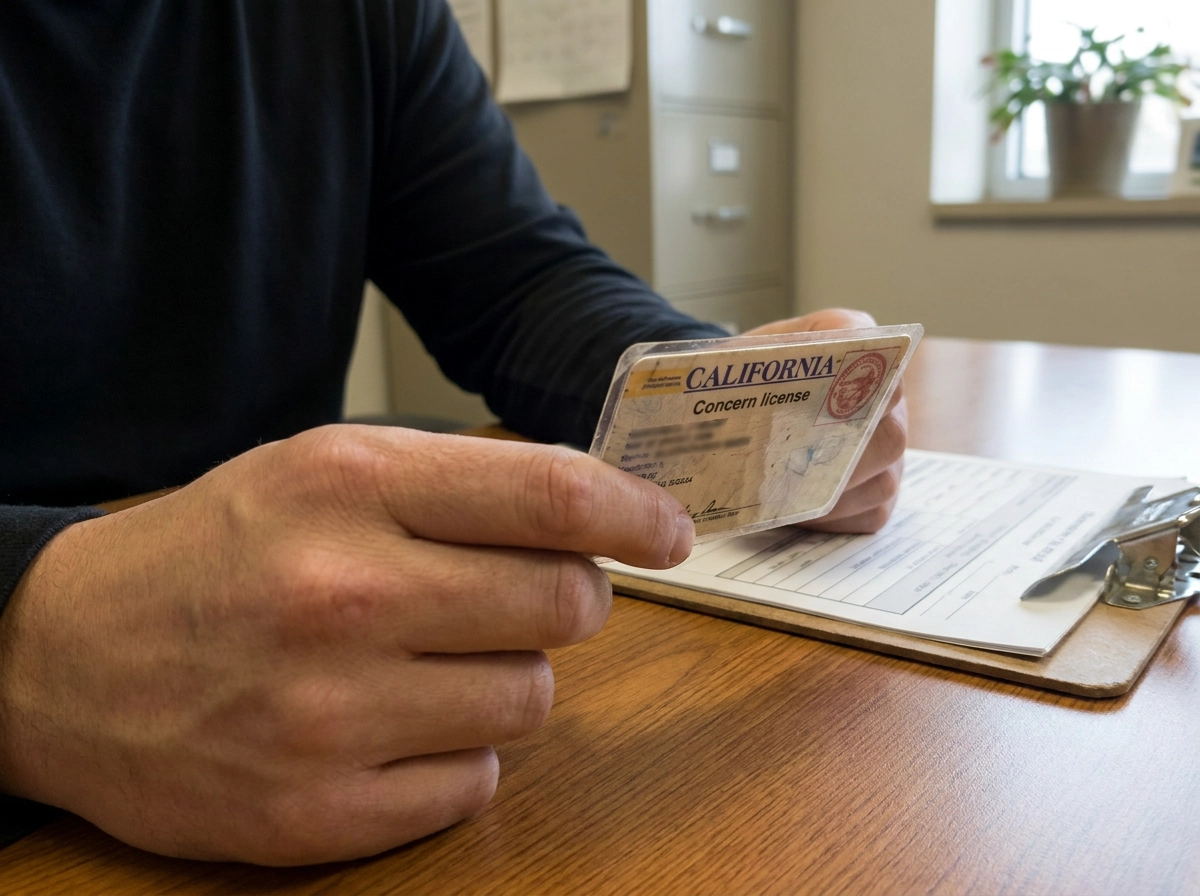
Verify the incoming provider before the first visit. California issues the servicing credential, the Concern license, per business location. A recognizable name does not prove the crew at your address is licensed to service, charge, or maintain extinguishers for a fee. Ask for the license tied to the location doing the work.
Confirm technician registration: individual technicians must pass a written exam, show evidence of experience, and hold an OSFM Certificate of Registration. Request names and registration details for the people who will touch your equipment.
Match capabilities to your equipment list: annual inspections, multi-year maintenance teardowns, hydrostatic testing, recharging, and replacement units beyond repair. If one is missing, you split the work and recreate the gap. See How to Evaluate a Fire Extinguisher Maintenance Provider.
Before the first visit, get written handoff confirmation: the provider should state it reviewed your transferred inventory, tag history, and open deficiency list, and will address outstanding items.
Apply the same checks to any fire extinguisher inspection company. Confirm credentials directly with the state; a website badge is not proof. First Response Fire Protection Services states it is a CSFM-licensed fire extinguisher inspection, maintenance, and sales company based in San Jacinto, California, serving Southern California, founded by a firefighter with more than 30 years of hands-on servicing experience. It states its technicians hold current OSFM certification and that it is an authorized Amerex distributor, a certified Service-Disabled Veteran-Owned Business, and a Small Business.
Step 5: Document the Handoff and Confirm Record Ownership
Close the switch with one dated document. Name a contact on each side, list every file exchanged, and state the day the incoming provider's coverage begins. That date is what shows the record was transferred deliberately, not abandoned mid-cycle.
Afterward, your facility retains the master record per § 574.5(a). Confirm in writing, as noted in Step 4, that the new provider reviewed and will close all outstanding items.
Build the retention calendar at handoff, not later. Section 574.5(a) ties retention to the next required maintenance, so log each unit's teardown and hydrostatic test due dates now. The same section addresses recording the date of manual inspections at least monthly, so verify the current full text of subsection (b) before quoting that monthly requirement; monthly documentation also carries coverage consequences, since your insurance coverage may depend on it.
Finally, ask the incoming provider to issue its own tags and records from its first visit forward. That keeps the tag chain unbroken across both vendors.
Questions Facility Managers Ask Before Changing Fire Extinguisher Service Co
With the handoff documented, these questions come up next.
Does the facility or the vendor own the records? Your facility does, see the record-obligation rule discussed in the opening section.
What if the outgoing provider refuses to share records? You still owe the history. Reconstruct it from tag photos, invoice files, and each unit's nameplate, then document the gaps honestly.
Can the new company finish the old one's work? Yes. That is the purpose of the written open deficiency list: the incoming fire extinguisher maintenance company should confirm in writing what it will complete and by when.
How long are records kept? Section 574.5(a) ties retention to the next required maintenance, as covered in Step 5. As a precaution, avoid discarding records on a fixed calendar cycle; the regulation ties retention to the next service event, not a fixed date. Plan OSHA requirements and service intervals accordingly.
Will a mid-year switch trigger a reinspection? No rule makes a vendor change itself a trigger. An incomplete handoff does: missing tag continuity and unresolved corrective actions are what draw attention at the next audit.
Next Steps: Make the Switch in Writing
With your § 574.5(a) record obligation confirmed (see opening section), close the switch in writing, with dates. Put each unit's next teardown and hydrostatic test due dates on the calendar now, not at renewal time.
Collect all three transfers in one package: the unit-level inventory list, the tag and certificate history, and the open deficiency list showing what was identified, when, and what completion date was promised. Without all three, the incoming fire extinguisher service company starts blind.
Verify credentials at the location and technician level as described in Step 4.
Then require written confirmation that the new provider has reviewed the unfinished items and will close them out by stated dates. Keep your own copy of the entire file.
Conclusion
A mid-year fire extinguisher service company switch is not a problem by itself. An incomplete handoff is. Protect your audit trail by transferring three things in one package: the unit-level inventory list, the inspection tag and certificate history, and the written open deficiency list. Verify the incoming provider at the branch and technician level, then document the handoff and keep your own copy. Your next step is to put the switch in writing, with dates, and add every teardown and hydrostatic test due date to your calendar now. Make the change deliberately, and your records will stay audit-ready.